



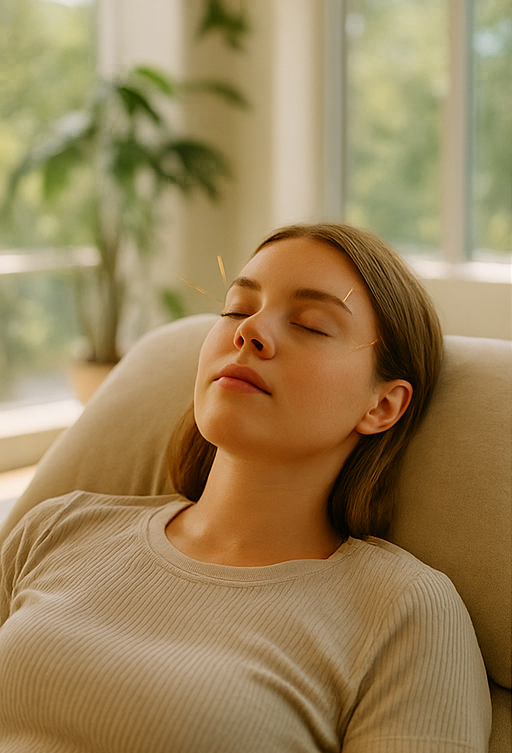
05 Fév Acupuncture for Anxiety: Evidence-Based Relief and Natural Balance
Acupuncture for anxiety is garnering increasing interest among both patients and healthcare professionals. It offers a natural, minimally invasive, and generally well-tolerated option for reducing anxious symptoms.
In 2013, approximately 3 million Canadians (11.6%) aged 18 and older reported suffering from an anxiety or mood disorder, with over a quarter stating that these conditions « greatly » or « extremely » hindered their quality of life (1). Given this significant burden, it is essential to ask: what does science say about the real benefits of acupuncture?
At a Glance — Key Takeaways
- Scientific Validation: Recent meta-analyses involving over 1,800 patients confirm that acupuncture significantly reduces anxiety symptoms (5).
- Neurological Action: Acupuncture regulates the autonomic nervous system, shifting the body from « stress mode » to « recovery mode » (4,6).
- Hormonal Balance: Treatment triggers the release of serotonin, dopamine, and endorphins—the body’s natural « feel-good » chemicals (8,11).
- High Safety Profile: Serious adverse events are extremely rare (less than 1 in 10,000) when performed by qualified professionals (17,18).
- Complementary Care: Acupuncture works effectively alongside psychotherapy (CBT) and medication (13).

Auriculotherapy — stimulating ear acupuncture points for anxiety.
1. Understanding Anxiety: When Does It Become a Disorder?
Anxiety is a normal survival reaction to perceived danger. However, it becomes problematic when it is too intense, frequent, or persistent, interfering with sleep, work, or relationships.
Common symptoms include:
- Physical: Palpitations, chest tightness, muscle tension, and digestive issues.
- Mental: Constant worrying, « racing thoughts, » and difficulty concentrating.
- Emotional: Irritability and hypersensitivity.
- Sleep: Insomnia or non-restorative sleep.
2. How Acupuncture Works (The Biomedical Perspective)
Action of Acupuncture on the Autonomic Nervous System.
Modern research has identified several neurophysiological mechanisms that explain how acupuncture calms the mind:
2.1. Regulating the Autonomic Nervous System
The body has two main modes: Sympathetic (fight or flight) and Parasympathetic (rest and digest). Acupuncture helps decrease sympathetic hyperactivity and promotes parasympathetic tone, inducing physiological relaxation (4,5).
2.2. Neurotransmitter Release
Needle stimulation triggers the brain to release essential chemicals:
- Endorphins: Natural pain and stress relievers.
- Serotonin: Regulates mood, sleep, and emotional stability.
- Dopamine: Associated with pleasure and motivation.
2.3. Modulating the Brain’s Stress Centers
Imaging studies show that acupuncture can modulate activity in the hypothalamus and other brain regions responsible for the « fight or flight » response, effectively « dialing down » the alarm system (8,9).
3. What the Clinical Studies Show

3.1. Meta-Analyses (Global Evidence)
A 2021 meta-analysis published in the Annals of General Psychiatry (20 RCTs, 1,823 patients) concluded that acupuncture is significantly more effective than control groups in reducing anxiety scores, with a moderate effect size and excellent tolerance (5).
3.2. Focus on Generalized Anxiety Disorder (GAD)
For those with GAD, acupuncture has shown significant promise. A 2022 PRISMA meta-analysis concluded that acupuncture provides substantial relief with fewer side effects than certain medications (12). Furthermore, studies suggest an « additive effect » when acupuncture is combined with standard antidepressants (SSRIs), leading to better outcomes than medication alone (13).
3.3. Auricular Acupuncture (Ear Acupuncture)
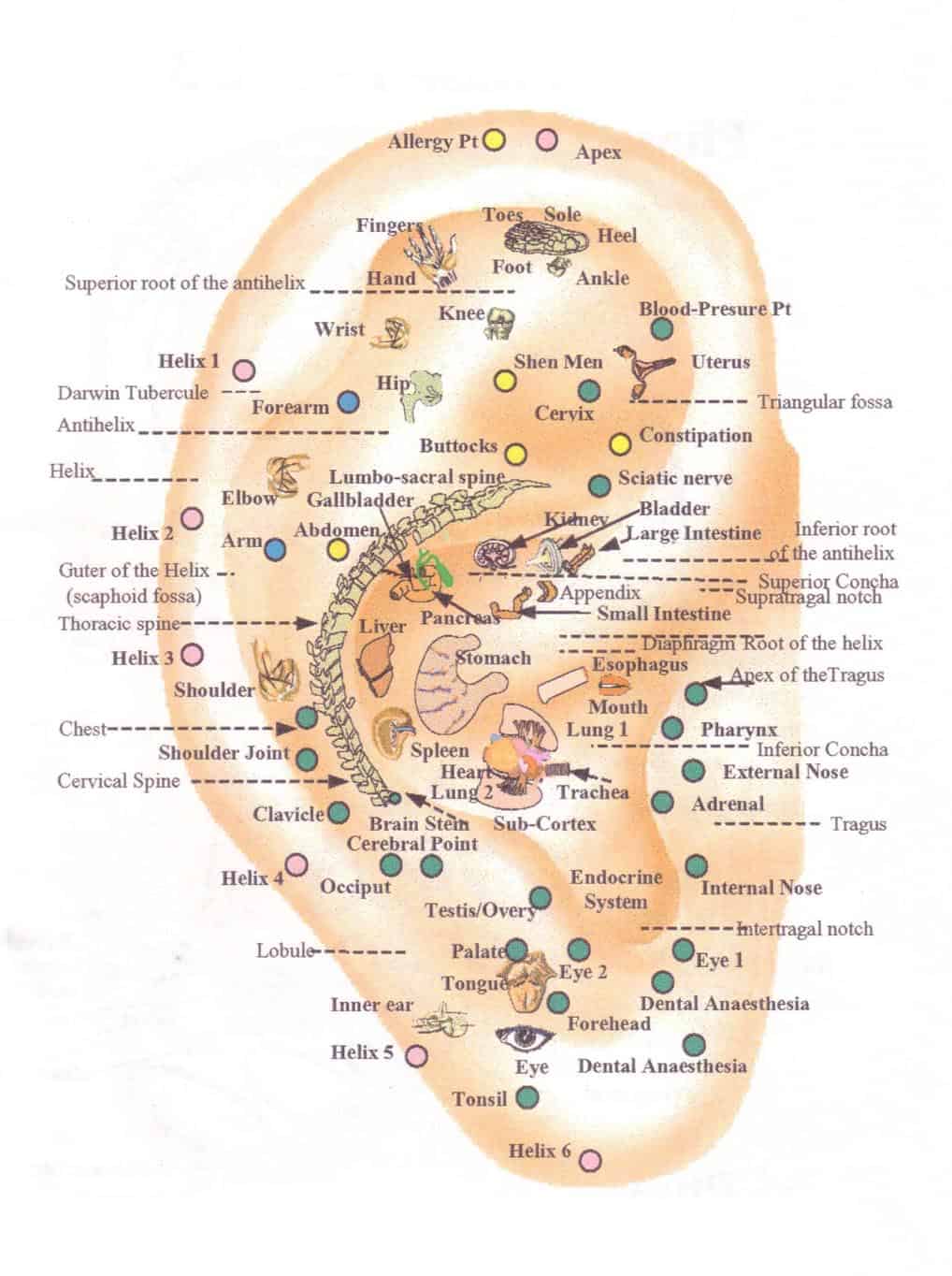
For those hesitant about body needles, auriculotherapy is a valid alternative. Research suggests it effectively reduces anxiety in specific contexts, such as pre-operative stress or exam-related anxiety (15,16).
4. Safety and the Treatment Process
4.1. Is It Safe?
Acupuncture is remarkably safe. Major prospective surveys have found that serious side effects occur in less than 1 out of every 10,000 treatments (17). Minor, temporary effects may include slight bruising or a feeling of deep relaxation (post-session « floatiness »).
4.2. Your Typical Treatment Plan
- Initial Assessment: A thorough review of your health history, sleep patterns, and specific anxiety triggers.
- The Session: 8 to 15 sterile needles are placed while you relax for 20–30 minutes.
- Typical Frequency: 1 session per week for 4 to 6 weeks, followed by maintenance sessions as needed during stressful periods.
5. Integrating Acupuncture into a Global Strategy
Acupuncture is most effective when part of a holistic approach:
- Combined with Cognitive Behavioral Therapy (CBT).
- Supported by good sleep hygiene and regular exercise.
- Paired with stress management techniques like cardiac coherence or meditation.
Who can benefit? Whether you have mild to moderate anxiety, are looking for a natural complement to medication, or are going through a high-stress period (burnout, grief), acupuncture offers a credible, evidence-based path to balance.
Summary
- Recent science confirms acupuncture is an effective, evidence-based option for anxiety (5,12).
- It works by regulating the nervous system and balancing brain chemistry.
- It is safe, professional, and compatible with other medical treatments.
Are you struggling with anxiety? At Clinique Shanti, our qualified acupuncturists take the time to understand your unique situation and develop a plan tailored to your needs.
Book an appointment online or contact us today. Phone/Text: (514) 220-2877 Locations:
- Montreal: 5282 3e Avenue
- Magog: 2381 Rue Principale Ouest, suite 210
-
Références
[1] Agence de la santé publique du Canada. Les troubles anxieux et de l’humeur au Canada – Points saillants de l’Enquête sur les personnes ayant une maladie chronique au Canada – 2014. 2015.
[2] American Psychiatric Association. Diagnostic and Statistical Manual of Mental Disorders (DSM-5). 5e éd. Arlington, VA: APA; 2013.
[3] Cuijpers P, Sijbrandij M, Koole S et al. Psychological treatment of generalized anxiety disorder: A meta-analysis. Clin Psychol Rev. 2014;34(2):130-140.
[4] Amorim D, Amado J, Brito I et al. Acupuncture and electroacupuncture for anxiety disorders: A systematic review of the clinical research. Complement Ther Clin Pract. 2018;31:31-37.
[5] Yang XY, Yang NB, Huang FF et al. Effectiveness of acupuncture on anxiety disorder: A systematic review and meta-analysis of randomised controlled trials. Ann Gen Psychiatry. 2021;20:9.
[6] Zhang Q et al. Acupuncture for treatment of anxiety: An overview of systematic reviews and meta-analyses. Complement Ther Clin Pract. 2019.
[7] Agelink MW et al. Does acupuncture influence the cardiac autonomic nervous system in patients with minor depression or anxiety disorders? Fortschr Neurol Psychiatr. 2003;71:141-149.
[8] Guo ZL, Longhurst JC. Expression of c-Fos in arcuate nucleus induced by electroacupuncture: relations to neurons containing opioids and glutamate. Brain Res. 2007;1166:65-76.
[9] Ribeiro SC et al. Interface of physical and emotional stress regulation through the endogenous opioid system and μ-opioid receptors. Prog Neuropsychopharmacol Biol Psychiatry. 2005;29(8):1264-1280.
[10] Harbach H et al. Minimal immunoreactive plasma β-endorphin and decrease of cortisol at standard analgesia or different acupuncture techniques. Eur J Anaesthesiol. 2007;24:370-376.
[11] Yin J, Chen J, Chen JDZ. Ameliorating effects and mechanism of electroacupuncture on gastric dysrhythmia, delayed emptying and impaired accommodation in diabetic rats. Am J Physiol Gastrointest Liver Physiol. 2010;298:G563-G570.
[12] Li M, Liu X, Ye X, Zhuang L. Efficacy of acupuncture for generalized anxiety disorder: A PRISMA-compliant systematic review and meta-analysis. Medicine (Baltimore). 2022;101(49):e30076.
[13] Additive effects of acupuncture in alleviating anxiety: A double-blind, randomized, controlled trial of acupuncture plus SSRI vs SSRI alone. Complement Ther Med. 2021;56:102603.
[14] Wang Y et al. Manual acupuncture vs placebo acupuncture for generalized anxiety disorder in perimenopausal women: A randomized, patient- and assessor-blind trial. Front Psychiatry. 2023;14:1240489.
[15] Dias EV et al. Is auriculotherapy effective and safe for the treatment of anxiety disorders? A systematic review. Complement Ther Clin Pract. 2022;48:101607.
[16] Kurebayashi LFS et al. Clinical effect of auricular acupuncture on the anxiety levels of university students: A randomized, controlled trial. Complement Ther Clin Pract. 2018;30:56-63.
[17] Hart A, Ernst E et al. Adverse events following acupuncture: Prospective survey of 32 000 consultations. BMJ. 2001;323:485-486.
[18] MacPherson H et al. The York acupuncture safety study: Prospective survey of 34 000 treatments by traditional acupuncturists. BMJ. 2001;323:486-487.
[19] World Health Organization. Guidelines on basic training and safety in acupuncture. WHO; 1999.
[20] World Health Organization. WHO benchmarks for the training of acupuncture. Geneva: WHO; 2021.
Sorry, the comment form is closed at this time.